Tripura Election Commission Holds All-Party Meeting Ahead of Civic Polls, Security and Voter Lists Take Centre Stage
Election Preparations Gain Momentum in Tripura
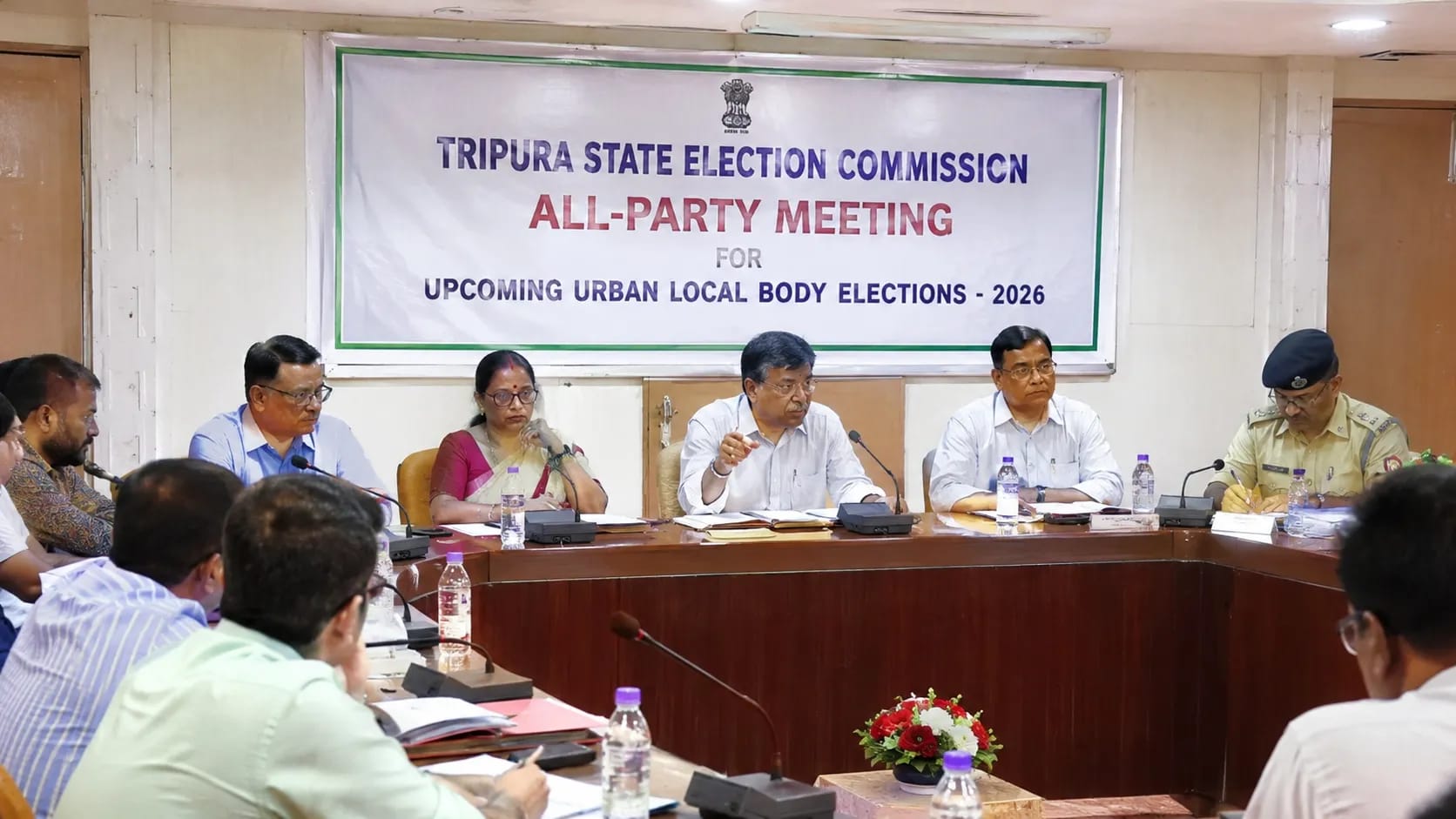
Preparations for Tripura's 2026 urban local body elections gathered momentum after the State Election Commission convened an all-party meeting in Agartala on October 14.
The meeting brought together representatives of political parties and senior election-related officials to discuss the arrangements required for conducting the municipal elections.
The consultations covered several important aspects of the electoral process, including voter lists, nomination procedures, security arrangements and the responsibilities of political parties.
Electoral Rolls Become a Key Discussion Point
One of the major subjects discussed during the meeting was the preparation and publication of electoral rolls.
State Election Commissioner Pradip Kumar Chakraborty highlighted the importance of publishing draft electoral rolls followed by their final publication.
Electoral rolls are fundamental to the democratic process because they determine who is eligible to vote in a particular constituency or municipal ward.
Errors, missing names or incorrect voter details can create difficulties for electors during polling.
Political parties were also given an opportunity to raise concerns relating to the electoral process.
Nomination Procedures and Election Rules Reviewed
The meeting also reviewed the different stages of the nomination process.
These included:
Filing of nomination papers.
Scrutiny of nominations.
Withdrawal of candidature.
Responsibilities of candidates and political parties.
Compliance with election rules.
Implementation of the Model Code of Conduct.
Elections Across Urban Local Bodies
The civic elections are significant because they cover municipal institutions across Tripura, including the Agartala Municipal Corporation.
These institutions are responsible for essential urban services such as:
Roads and street infrastructure.
Drainage and sanitation.
Waste management.
Public health and cleanliness.
Local development projects.
Municipal administration.
Political parties are therefore competing not only for electoral victories but also for control over institutions that directly influence people's everyday lives.
Political Competition Intensifies
The preparations have unfolded amid competition between the ruling BJP and opposition parties, including Congress and CPI(M).
The opposition has raised questions about election security, candidate protection and the fairness of the electoral process.
The ruling party, meanwhile, will seek to defend its political position and demonstrate support for its local governance agenda.
What Happens Next?
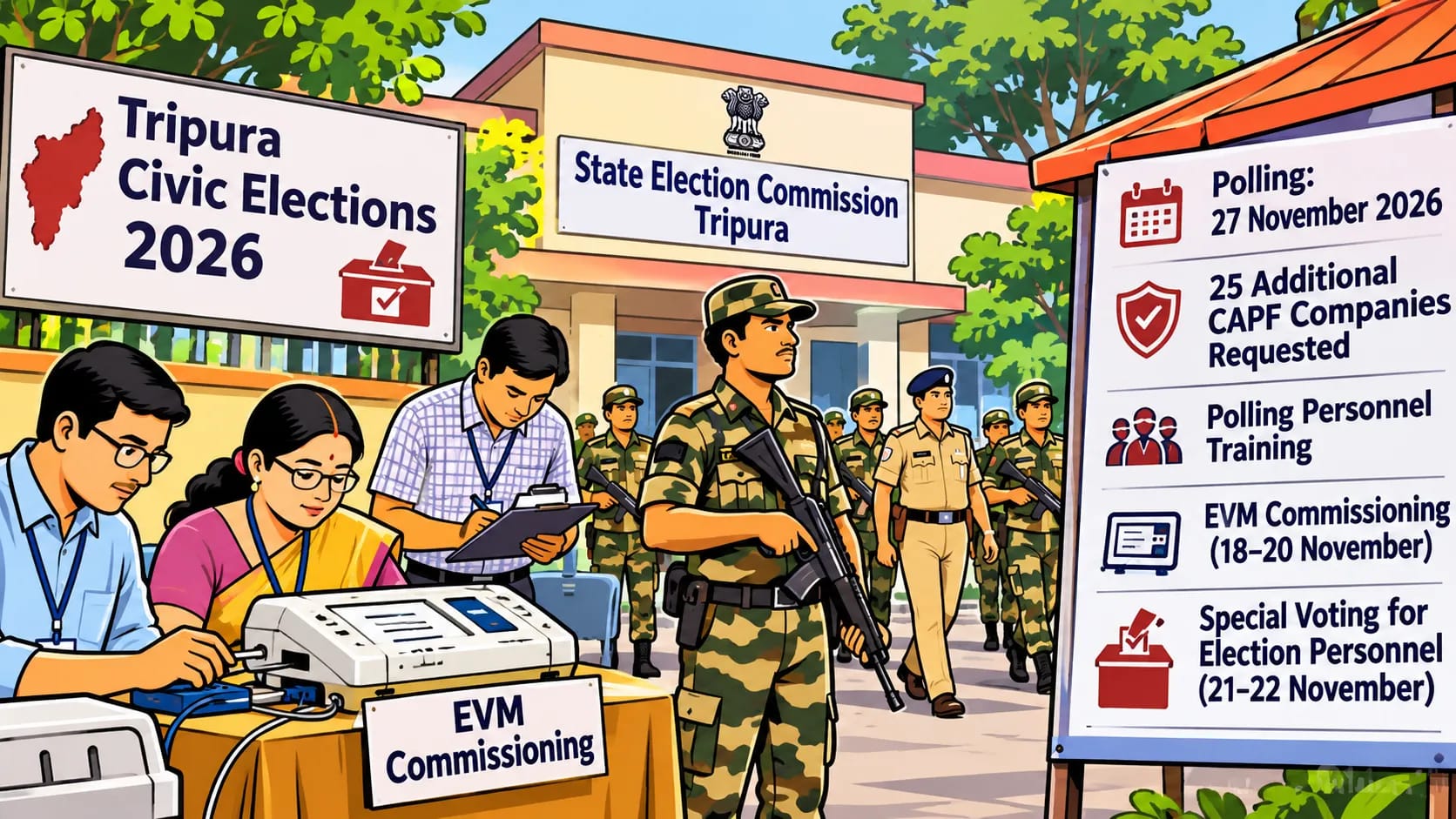
As the November 27 polling date approaches, the main responsibilities involve finalising polling arrangements, ensuring adequate security, managing complaints and monitoring compliance with election regulations.
The success of the process will depend on effective coordination among election officials, police authorities and political parties.


Join the discussion
Comments (0)