Dadra and Nagar Haveli and Daman and Diu Politics
Dadra and Nagar Haveli and Daman and Diu, led by Chief Minister Not Applicable. Track the latest political developments, policy decisions, and electoral dynamics shaping Dadra and Nagar Haveli and Daman and Diu.
Current vs. Opposition
Not Applicable
Chief Minister, Dadra and Nagar Haveli and Daman and Diu
View profile OppositionNot Applicable
Opposition Leader — Not Applicable, Dadra and Nagar Haveli and Daman and Diu Assembly
View profileHistory & Achievements
History
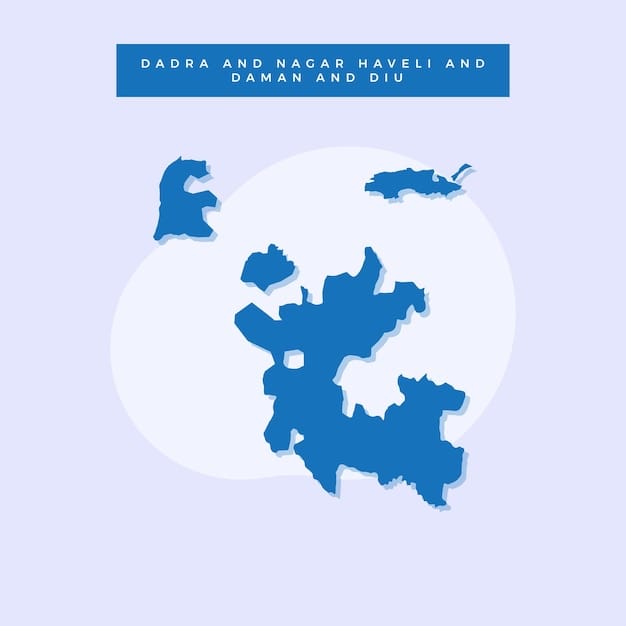
The territory has a distinctive political history because its present-day regions were historically administered separately. Dadra and Nagar Haveli was under Portuguese control until its liberation in 1954 and subsequently became a Union Territory of India in 1961. Daman and Diu remained under Portuguese administration until 19 December 1961, when Indian forces liberated the territories. Daman and Diu subsequently became a Union Territory of India. For many years, Dadra and Nagar Haveli and Daman and Diu existed as separate Union Territories. Parliament passed the Dadra and Nagar Haveli and Daman and Diu (Merger of Union Territories) Act, 2019, creating the present combined Union Territory from 26 January 2020. The Union Territory does not have its own Legislative Assembly or Chief Minister. It is administered by an Administrator appointed by the President of India. The territory currently has three districts: Dadra & Nagar Haveli, Daman and Diu. The territory participates in India's parliamentary democratic system through representation in the Lok Sabha. Its electoral administration is handled through the Election Commission of India and the UT's Chief Electoral Officer.
Achievements
Dadra and Nagar Haveli and Daman & Diu has developed a diverse economy based on industry, tourism, agriculture, fisheries, infrastructure, services and coastal activities. 1. Industrial Development The territory has emerged as an important industrial centre in western India. Manufacturing activities include textiles, plastics, pharmaceuticals, engineering products, chemicals, food processing and other industries. 2. Tourism Development Tourism is an important economic activity. Daman, Diu, Silvassa, Devka Beach, Jampore Beach, Diu Fort, St. Paul's Church, Naida Caves and the coastal areas attract visitors from across India. 3. Coastal Tourism The territory's Arabian Sea coastline provides opportunities for beach tourism, water-based recreation, hospitality and leisure activities. 4. Infrastructure Development Roads, bridges, government buildings, water supply, electricity networks, sanitation and other civic infrastructure have been expanded to support residents, industries and tourism. 5. Connectivity The territory benefits from its location near Gujarat and Maharashtra, providing access to major commercial and industrial markets. Improved roads and transport infrastructure have strengthened connections between Daman, Diu, Dadra and Nagar Haveli and neighbouring states. 6. Agriculture and Horticulture Agriculture remains important in rural areas, with cultivation of rice, pulses, vegetables, fruits and other crops. Horticulture and plantation activities also contribute to local livelihoods. 7. Tribal Development Dadra and Nagar Haveli has a significant tribal population. Government programmes have focused on education, healthcare, housing, employment, infrastructure and welfare for tribal communities. 8. Education The administration has expanded schools, colleges, technical education and skill-development opportunities. Educational infrastructure has helped improve access to learning for residents across the three districts. 9. Healthcare Healthcare infrastructure has been strengthened through hospitals, health centres, medical facilities and public-health programmes serving urban and rural communities. 10. Fisheries and Coastal Economy Daman and Diu have a long association with fishing and maritime activities. Fisheries provide livelihoods for coastal communities and contribute to the local economy. 11. Cleanliness and Civic Development The administration has undertaken programmes for sanitation, solid-waste management, cleanliness, public spaces and improved urban infrastructure. 12. Digital Governance Digital services have expanded across the administration, including online public services, digital applications, citizen services and election-related services. The UT also operates the MyDDD mobile application for residents. 13. Renewable Energy and Sustainable Development The territory has opportunities for solar energy and other clean-energy initiatives. Environmental management is increasingly important as infrastructure and tourism continue to grow. 14. Heritage Conservation Daman and Diu have important Portuguese-era churches, forts and historic structures. Preservation of these sites supports both cultural heritage and tourism. 15. Strategic Economic Location Its location between Gujarat and Maharashtra gives the Union Territory access to major industrial, commercial and consumer markets. This has helped attract manufacturing and service-sector investment. 16. Employment and Business Opportunities Industrialisation, tourism, hospitality, retail, transportation, fisheries and construction have created employment and business opportunities for local residents. 17. Integrated UT Development The 2020 merger created a single administrative framework for Dadra and Nagar Haveli, Daman and Diu, allowing development planning and administration to be coordinated across all three districts.
Dadra and Nagar Haveli and Daman and Diu News
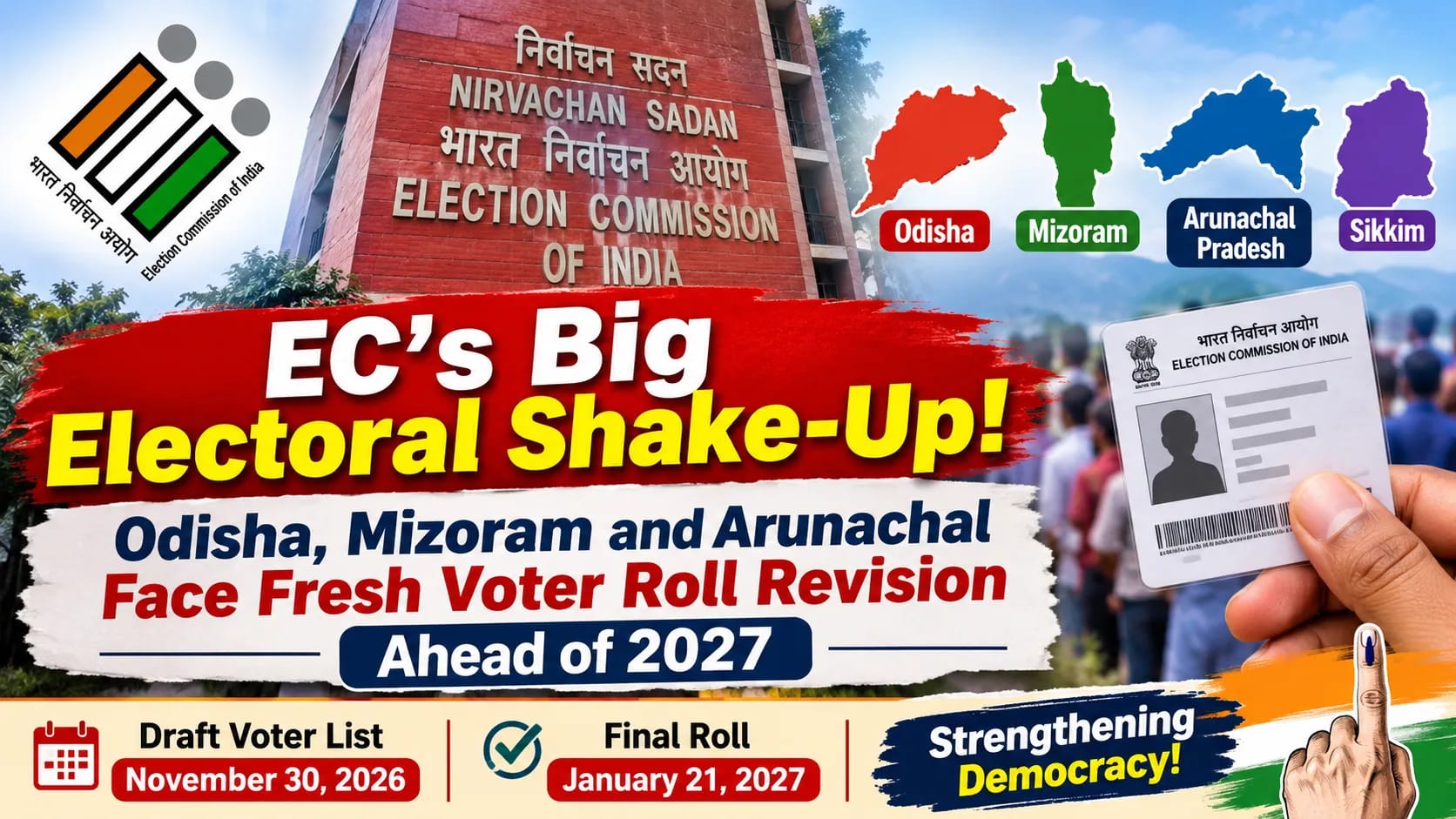
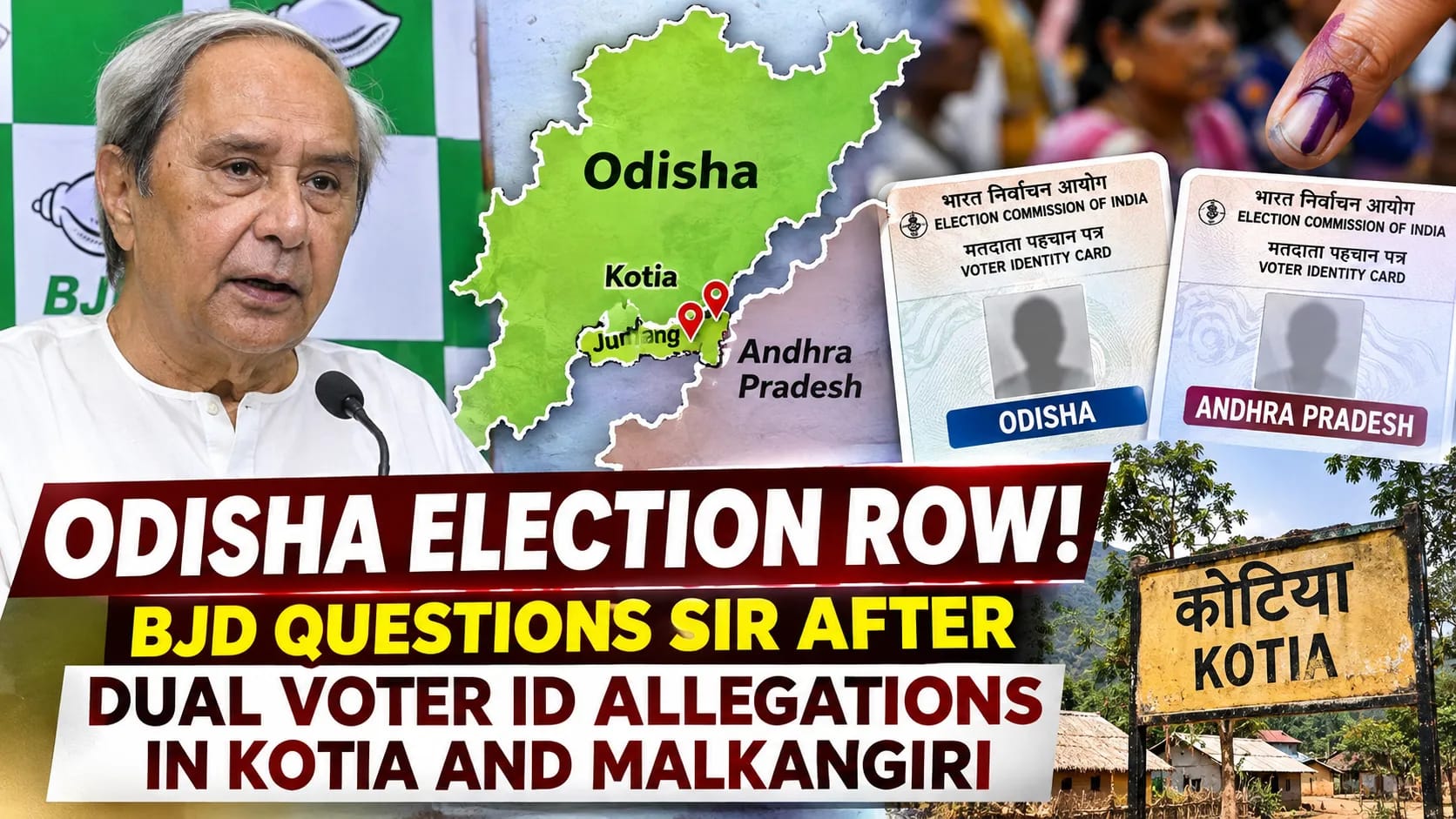
EC's Big Electoral Shake-Up! Odisha, Mizoram and Arunachal Face Fresh Voter Roll Revision Ahead of 2027
The Election Commission of India has announced a Special Summary Revision of electoral rolls in Odisha, Mizoram, Arunachal Pradesh and Sikkim. With draft voter lists scheduled for November 30 and final publication on January 21, 2027, the exercise puts voter inclusion, electoral accuracy and political accountability under fresh scrutiny.
By Sucharita Mohanty • 29 views