Election in Jammu & Kashmir
Elections in Jammu & Kashmir
Jammu & Kashmir has a distinctive electoral and political history shaped by its constitutional position, regional diversity, changing administrative arrangements and the participation of national and regional political parties. Elections in the Union Territory have included Lok Sabha elections, Legislative Assembly elections, local body elections and Panchayati Raj elections.
The electoral process in Jammu & Kashmir provides an important mechanism for citizens to participate in representative government and determine their political representatives at different levels.
Jammu & Kashmir Legislative Assembly Elections
The Jammu & Kashmir Legislative Assembly is the elected legislative body of the Union Territory of Jammu & Kashmir. Following the reorganisation of the former state of Jammu and Kashmir in 2019, Jammu & Kashmir became a Union Territory with a legislature, while Ladakh became a separate Union Territory without a legislature.
The Legislative Assembly has 90 elected seats. In addition, the legal framework provides for nominated members in certain circumstances.
The first Legislative Assembly election after the 2019 reorganisation was held in 2024. The election was conducted in three phases in September and October 2024, with counting held on 8 October 2024.
The 2024 election was significant because it was the first Assembly election in Jammu & Kashmir since the reorganisation of the former state into two Union Territories.
2024 Jammu & Kashmir Assembly Election
The 2024 Jammu & Kashmir Assembly election was conducted in three phases:
Phase 1: 18 September 2024
Phase 2: 25 September 2024
Phase 3: 1 October 2024
Counting of votes: 8 October 2024
The election covered all 90 Assembly constituencies.
Major political parties and alliances participating in the election included the Jammu & Kashmir National Conference (NC), Indian National Congress (INC), Bharatiya Janata Party (BJP), People's Democratic Party (PDP) and several other regional and national parties and independent candidates.
The National Conference and Congress contested the election as allies, while the BJP contested independently across its areas of political focus.
The election resulted in the formation of a National Conference-led government, with Omar Abdullah becoming Chief Minister of Jammu & Kashmir.
Jammu & Kashmir Lok Sabha Elections
Jammu & Kashmir also participates in elections to the Lok Sabha, the lower house of India's Parliament.
The Union Territory has five Lok Sabha constituencies:
Baramulla
Srinagar
Anantnag-Rajouri
Udhampur
Jammu
The constituencies cover the major political and geographical regions of Jammu & Kashmir.
The 2024 Lok Sabha election in Jammu & Kashmir was conducted in multiple phases. Voters participated in electing representatives to the 18th Lok Sabha.
The Anantnag-Rajouri constituency was among the constituencies where polling was conducted during the later phase of the election after the Election Commission revised the polling schedule.
Political Parties in Jammu & Kashmir Elections
Several political parties have played important roles in elections in Jammu & Kashmir.
Jammu & Kashmir National Conference
The Jammu & Kashmir National Conference is one of the region's oldest political parties. It has historically played a major role in electoral politics in the Kashmir Valley and Jammu & Kashmir's political institutions.
The party has been associated with leaders including Sheikh Abdullah, Farooq Abdullah and Omar Abdullah.
Bharatiya Janata Party
The BJP is a major national political party with significant electoral support in the Jammu region. The party has also contested elections across Jammu & Kashmir and has participated in the region's parliamentary and Assembly politics.
Indian National Congress
The Congress has a long electoral history in Jammu & Kashmir and has contested both parliamentary and Assembly elections. It has also formed alliances with regional parties at different points.
Jammu & Kashmir Peoples Democratic Party
The PDP is a regional political party founded in 1999. It has been an important participant in elections in Jammu & Kashmir, particularly in the Kashmir Valley.
Jammu & Kashmir Apni Party
The Jammu & Kashmir Apni Party is a regional political organisation that has participated in elections in the Union Territory.
Other Political Parties and Candidates
Jammu & Kashmir elections also feature participation from smaller regional parties, national parties, independent candidates and other political organisations. Their presence varies from election to election and constituency to constituency.
Electoral Regions
Jammu & Kashmir's electoral politics reflects considerable geographical and demographic diversity.
Jammu Region
The Jammu region contains constituencies where the BJP has traditionally had a significant electoral presence. The region includes areas such as Jammu, Kathua, Samba, Udhampur, Doda, Kishtwar, Rajouri and Poonch.
Kashmir Valley
The Kashmir Valley contains constituencies where regional parties such as the National Conference and PDP have historically played important roles. Major electoral areas include Srinagar, Baramulla, Anantnag, Pulwama, Shopian, Kulgam, Kupwara and Budgam.
Elections After the 2019 Reorganisation
The reorganisation of the former state of Jammu and Kashmir in 2019 significantly changed the administrative and electoral structure of the region.
The former state was divided into:
Union Territory of Jammu & Kashmir: With a Legislative Assembly.
Union Territory of Ladakh: Without a Legislative Assembly.
The Jammu & Kashmir Reorganisation Act, 2019 also provided for changes to parliamentary and legislative representation.
Subsequently, the Delimitation Commission carried out a delimitation exercise for Jammu & Kashmir. The delimitation process altered the boundaries and distribution of Assembly constituencies and increased the number of Assembly seats from the earlier structure.
Delimitation of Assembly Constituencies
Delimitation determines the boundaries and distribution of electoral constituencies.
For Jammu & Kashmir, the delimitation exercise was particularly important because it followed the creation of the Union Territory and preceded the restoration of Assembly elections.
The final delimitation order was issued in 2022. The number of Assembly constituencies was set at 90, comprising:
Jammu: 43 seats
Kashmir: 47 seats
The delimitation also introduced changes to reserved representation, including reserved seats for Scheduled Castes in the Jammu region and provisions relating to Scheduled Tribe representation.
Panchayat and Local Elections
Elections in Jammu & Kashmir are not limited to Parliament and the Legislative Assembly. Citizens also participate in local democratic institutions.
These include:
Panchayats
District Development Councils
Municipal bodies
Other local representative institutions
The District Development Council elections held in 2020 were an important development in local governance. They provided voters with an opportunity to elect representatives to district-level institutions.
Voter Participation
Voter participation has varied considerably across Jammu & Kashmir depending on the election, constituency, region and political circumstances.
Turnout can differ significantly between Jammu and Kashmir Valley constituencies. Factors influencing participation have included political developments, security conditions, voter mobilisation, candidate competition and public interest in individual elections.
Election authorities have implemented measures intended to facilitate voter participation, including polling arrangements, security deployment, voter awareness activities and accessibility measures.
Election Commission and Electoral Administration
Elections in Jammu & Kashmir are administered by the Election Commission of India for Parliament and Legislative Assembly elections.
The electoral administration is responsible for:
Preparing and updating electoral rolls
Conducting elections
Establishing polling stations
Issuing election schedules
Monitoring election expenditure
Implementing the Model Code of Conduct
Counting votes
Declaring election results
Local elections are conducted under the relevant constitutional and statutory framework applicable to local government institutions.
Important Elections in Jammu & Kashmir
Some major elections in the region's political history include:
1951: Elections to the Constituent Assembly of Jammu & Kashmir.
1962: Legislative Assembly elections under the constitutional framework then applicable to Jammu & Kashmir.
1977: Assembly elections widely regarded as an important election in the region's electoral history.
1987: Assembly election that remains a significant and contested episode in discussions of Jammu & Kashmir's political history.
1996: Assembly elections held after a prolonged gap.
2002: Assembly elections that resulted in a change in the political administration.
2008: Assembly elections followed by the formation of a coalition government.
2014: Assembly elections that produced a fragmented mandate and subsequently led to a coalition government.
2018: The elected government fell after the withdrawal of support by the BJP, followed by a period of Governor's Rule and later President's Rule.
2024: First Legislative Assembly election in Jammu & Kashmir following the 2019 reorganisation.
Why Jammu & Kashmir Elections Matter
Elections in Jammu & Kashmir are important for understanding political representation, regional interests, governance and democratic participation in the Union Territory.
The region's elections bring together different political perspectives from Jammu, Kashmir Valley and other areas. Election results can influence the formation of governments, parliamentary representation, local governance and the political direction of the Union Territory.
How to Read Jammu & Kashmir Election Results
When examining an election result, readers should consider more than the number of seats won.
Important indicators include:
Total votes received by each party
Vote share
Seats won
Constituency-wise results
Winning margins
Voter turnout
Regional distribution of seats
Performance of independent candidates
Alliance arrangements
Changes compared with the previous election
A party may receive a substantial vote share without winning a similar proportion of seats because India's elections use the first-past-the-post system, in which the candidate receiving the highest number of valid votes in a constituency wins that seat.
Jammu & Kashmir Election Information
Indian Rajniti can provide election-related information covering:
Jammu & Kashmir Assembly elections
Lok Sabha elections
Constituency-wise results
Candidate information
Party performance
Vote share
Winning margins
Voter turnout
Election history
Political parties
Parliamentary constituencies
Assembly constituencies
Local elections
Major political developments
Election information should be checked against official election records and updated whenever new results, schedules or official announcements are released.
Conclusion
The electoral history of Jammu & Kashmir reflects the region's changing political and administrative circumstances. From early legislative elections to parliamentary contests, local elections and the 2024 Assembly election, electoral institutions have remained an important channel for political participation.
Understanding Jammu & Kashmir elections requires looking at constituency-level results, regional voting patterns, political alliances, voter turnout and changes in the constitutional and administrative framework. A detailed election record can help readers follow these developments and understand how representation in the Union Territory has evolved over time.
Election in Jammu & Kashmir News
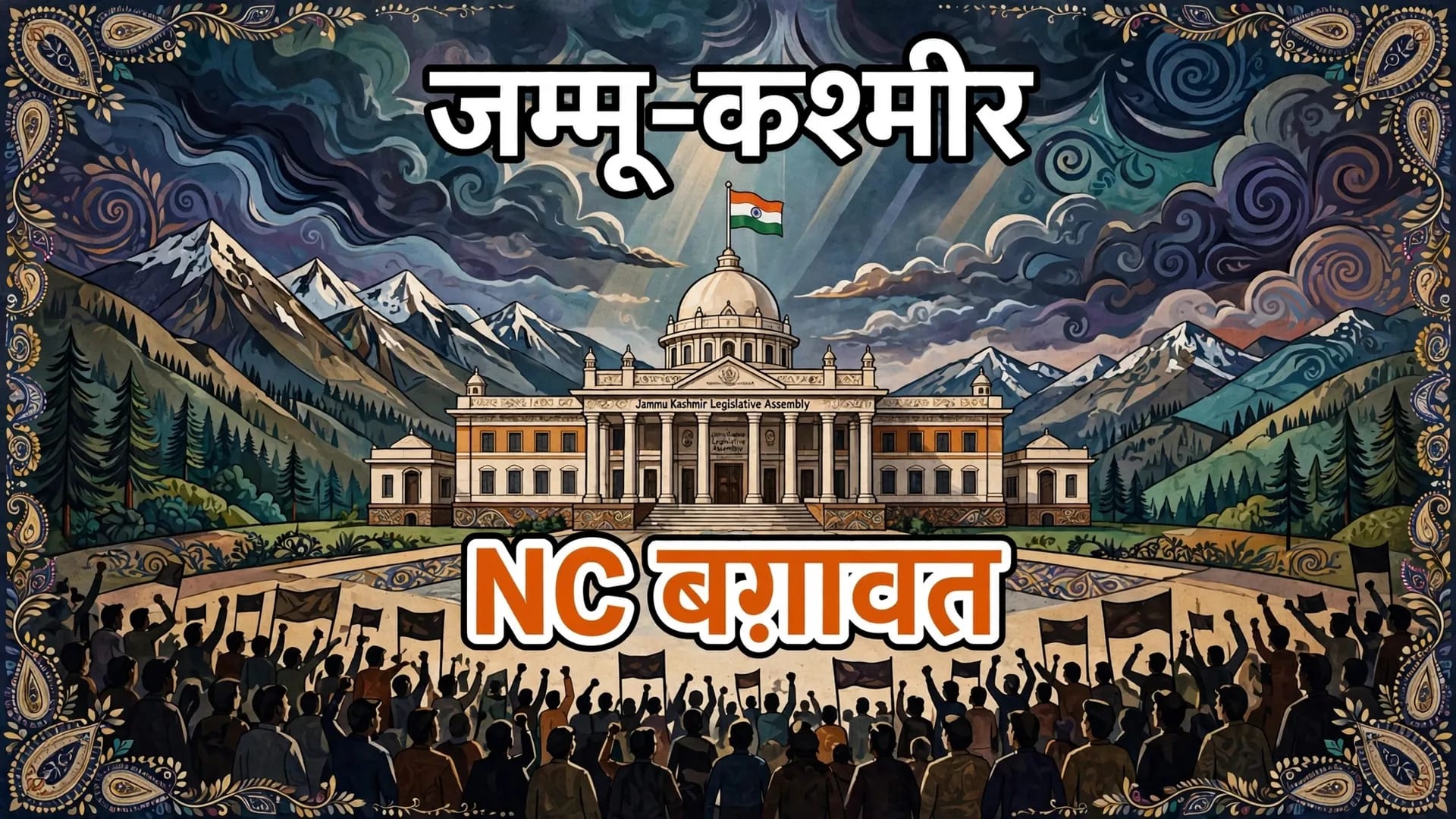
जम्मू-कश्मीर में नेशनल कॉन्फ्रेंस में बगावत, उमर अब्दुल्ला ने दिया इस्तीफे का प्रस्ताव फारूक अब्दुल्ला ने संभाला मोर्चा
20 से ज्यादा विधायक नाराज, कैबिनेट विस्तार के बाद बढ़ा असंतोष, अब 4-4 विधायकों की सलाहकार समिति बनेगी
By Karishma • 11 views