Karnataka’s Financial Crisis: Kumaraswamy Accuses Congress of Taxing People to Cover Its Spending
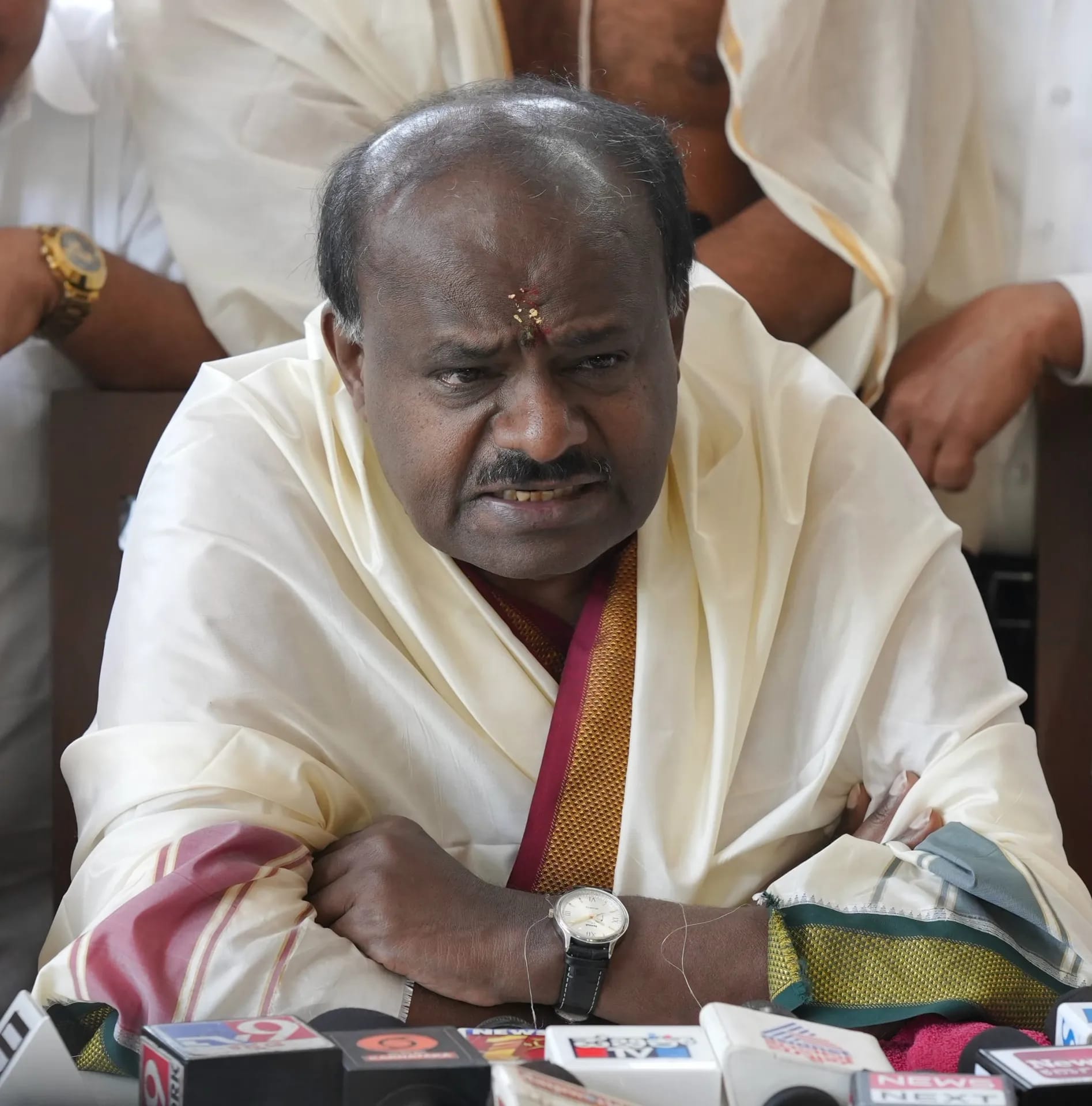
Kumaraswamy Questions Government's Financial Priorities
Kumaraswamy alleged that farmers and ordinary families are struggling to manage rising expenses, while the government continues to increase taxes and prices. He questioned why the administration was able to announce financial support for political organisations but allegedly unable to release sufficient funds for roads, drinking water, drainage and other basic development works.
He specifically questioned the proposed allocation of ₹10 lakh to Bharat Jodo Sanghas at every panchayat and ward level, claiming that the overall spending could reach around ₹1,000 crore. These figures and allegations were raised by Kumaraswamy and have not been independently established in the public statement.
Five Guarantees and the Growing Financial Burden
The Congress government's five guarantee schemes have been a major political issue since the party came to power in 2023. Kumaraswamy argued that the government is presenting these schemes as achievements while failing to explain the financial pressure involved in funding them.
He also questioned the logic of providing benefits through welfare schemes while increasing the cost of public services and essential commodities. Recent increases in milk prices and bus fares have added to the debate over the impact of government decisions on household budgets.
However, the financial debate is not limited to the guarantees alone. Revenue collection, borrowing, interest payments, drought-related spending and the cost of running government departments also influence the state's financial position.
Karnataka's Deficit Raises Questions
The state's budget figures underline why financial management has become a major political issue. According to the Karnataka Budget Analysis for 2026–27 by PRS Legislative Research, the state's fiscal deficit is estimated at ₹97,448 crore, while its revenue deficit is projected at ₹22,957 crore.
A fiscal deficit means the government spends more than its receipts, excluding borrowings, and fills the gap through borrowing. It does not automatically mean the state is bankrupt, but continued deficits and rising liabilities require careful financial planning.
Kumaraswamy has argued that repeated tax increases and price hikes are transferring the burden of financial management to citizens. He has also questioned whether borrowed money and public revenue are being directed towards productive development.
Farmers and Common People at the Centre of the Debate
Kumaraswamy also highlighted drought conditions and the difficulties faced by farmers, alleging that people in several areas are struggling with drinking-water shortages and fodder scarcity.
His central question is whether the government can continue to expand welfare commitments while meeting the needs of agriculture, infrastructure and essential public services without repeatedly increasing the burden on taxpayers.
The Congress government's response and explanation of its spending priorities remain important to this debate. The administration must explain how it plans to balance welfare commitments, development expenditure and revenue mobilisation.
Conclusion: Who Should Pay for Karnataka's Financial Pressures?
Kumaraswamy's latest criticism has put the spotlight on a question that directly affects every household: should citizens continue to face higher prices and taxes while the government struggles to balance its spending priorities?
Welfare schemes can provide important support to families, but they must go hand in hand with financial discipline, transparent spending and development. Ultimately, Karnataka's people will judge the government not only by the benefits it announces, but also by the quality of public services, infrastructure and economic opportunities it delivers.






Join the discussion
Comments (0)