Nagaland Political Debate Intensifies! NPP Approaches Governor, Seeks Constitutional Review of Wildlife Protection Act
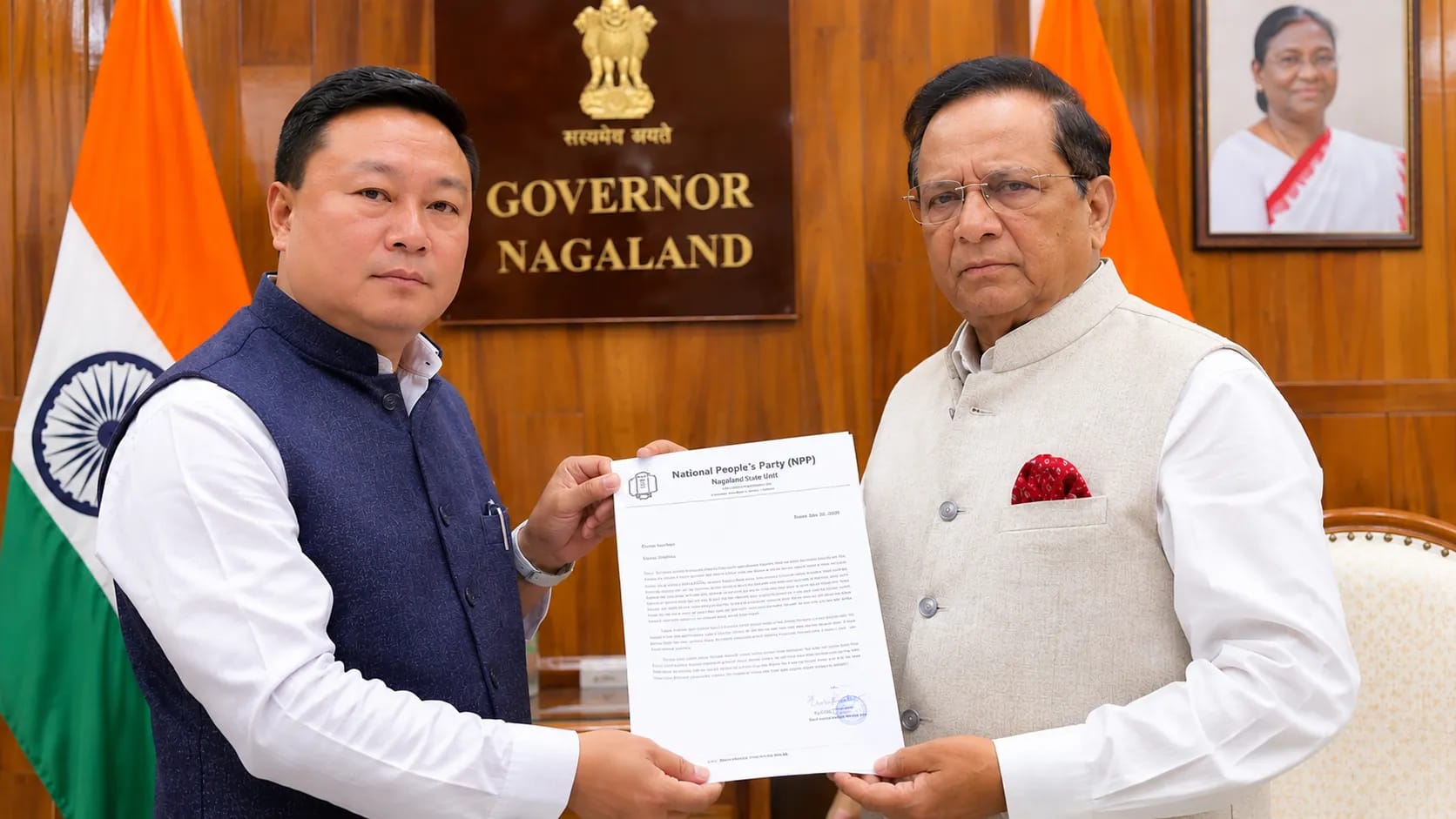
NPP Takes Wildlife Protection Act Issue to Nagaland Governor
A significant political and constitutional development has emerged in Nagaland after the National People's Party (NPP) approached Governor Nand Kishore Yadav seeking a detailed examination of the applicability of the Wildlife (Protection) Act, 1972, in the state.
The party has raised concerns about the relationship between India's wildlife protection legislation and the special constitutional safeguards available to Nagaland under Article 371A.
The representation was submitted by NPP National Vice President Vevoyi Wideo, who met the Governor at Lok Bhavan in Kohima on November 17, 2026.
The party has requested a comprehensive review of the legal position surrounding the original adoption of the Act in Nagaland, its subsequent amendments and their relationship with Naga customary laws.
What Has the NPP Demanded?
The NPP has requested the Governor to facilitate a constitutional and legal examination of the Wildlife (Protection) Act and its subsequent amendments.
The party has specifically called for verification of the Nagaland Legislative Assembly's resolution dated September 18, 1981, through which the state adopted the legislation.
According to the representation, the original resolution and the corresponding Gazette notification need to be examined to establish the precise legal scope of the Act's applicability.
The party has also raised questions about amendments introduced in:
1991
2002
2006
2022
Its central concern is whether these subsequent amendments automatically apply to Nagaland under the original 1981 resolution or whether additional legislative clarification or a fresh resolution is required.
Article 371A: Why Is It Important for Nagaland?
At the centre of the controversy is Article 371A of the Indian Constitution.
Nagaland enjoys special constitutional safeguards under this provision, which protects specific aspects of Naga identity, traditions and customary institutions.
Article 371A(1)(a) provides that certain Acts of Parliament concerning specified subjects will not apply to Nagaland unless the Nagaland Legislative Assembly decides by a resolution to apply them.
These subjects include:
Religious or social practices of the Nagas.
Naga customary law and procedure.
Administration of civil and criminal justice involving decisions according to Naga customary law.
Ownership and transfer of land and its resources.
Wildlife Protection Versus Naga Customary Practices
One of the important aspects of the NPP's representation concerns traditional hunting practices and the relationship between local communities and their natural environment.
In several Naga communities, traditional hunting, village-level resource management and customary practices have historical and cultural significance.
The party believes that legal uncertainty surrounding wildlife protection legislation could create confusion for local communities and enforcement authorities.
Why Are the 2022 Amendments Also Under Examination?
The NPP has specifically highlighted the amendments introduced to the Wildlife (Protection) Act over the years.
The Wildlife (Protection) Act, 1972, has undergone several legislative changes to strengthen wildlife conservation, regulate activities involving protected species and modify the legal framework governing wildlife-related offences.
The party wants the authorities to establish whether the amendments introduced in 1991, 2002, 2006 and 2022 are covered by the original 1981 Assembly resolution.
The question is particularly relevant because legislative amendments can change the scope of an existing law.
Political Implications for Nagaland
The development could generate further political discussion in Nagaland because Article 371A is closely connected with the state's constitutional identity and autonomy.
For the state government, the immediate challenge will be to establish clarity regarding the legal status of the wildlife legislation and its amendments.
The matter may also encourage discussions among political parties, customary institutions, village authorities and conservation stakeholders.
The debate could become particularly important if legal uncertainty continues to affect the relationship between enforcement agencies and local communities.
What Happens Next?
The next important development will be the response from the Governor's office and the state government.
Several questions remain to be addressed:
Will the state government initiate a formal legal examination?
Will the original 1981 Assembly resolution and Gazette notification be made available for verification?
Will the applicability of the 1991, 2002, 2006 and 2022 amendments be examined separately?
Can a framework be developed that balances wildlife conservation with constitutional protections?
Conclusion
The coming response from the state government and constitutional authorities will be crucial in determining the direction of this debate.






Join the discussion
Comments (0)