₹1.09 Lakh Crore at the Centre of India's Political Debate: Bihar, Odisha and Eastern States Get Major Tax Devolution
A Major Financial Announcement Puts States in Focus
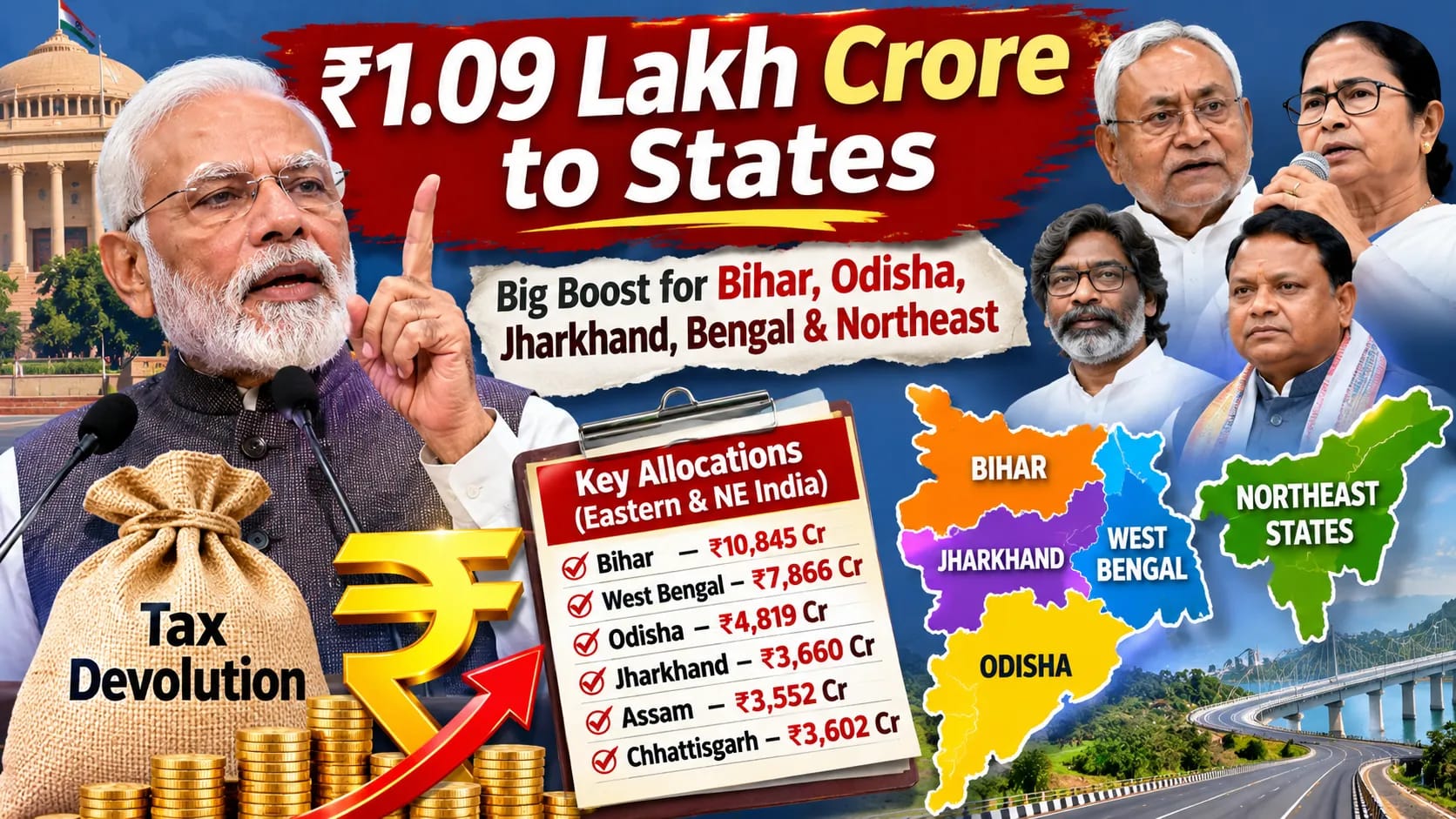
The Union Government released ₹1,09,019 crore as a regular instalment of tax devolution to state governments on November 5, 2026.
The instalment, normally scheduled for November 10, was released five days early to help states accelerate capital expenditure and finance development and welfare-related spending.
The announcement has important implications for states across Eastern and Northeast India, where infrastructure, rural development, public services and welfare programmes remain significant governance priorities.
How Much Did Eastern India Receive?
The state-wise allocations announced by the Union Government include:
Bihar – ₹10,845 crore
West Bengal – ₹7,866 crore
Odisha – ₹4,819 crore
Jharkhand – ₹3,660 crore
Assam – ₹3,552 crore
Chhattisgarh – ₹3,602 crore
Northeast India Also Receives Its Share
The release also covers the northeastern states:
Arunachal Pradesh – ₹1,476 crore
Manipur – ₹682 crore
Meghalaya – ₹688 crore
Mizoram – ₹615 crore
Nagaland – ₹524 crore
Sikkim – ₹365 crore
Tripura – ₹699 crore
The Political Question: Will the Money Reach the Ground?
The announcement creates an important accountability challenge for state governments.
For Bihar, Odisha, Jharkhand and West Bengal, the focus will be on how additional financial resources translate into visible improvements in infrastructure, employment opportunities and public welfare.
In the Northeast, effective utilisation of funds will remain important for connectivity, rural development and essential services.
Centre-State Relations Enter the Spotlight
Tax devolution is an important part of India's federal financial framework.
The release of funds provides an opportunity for state governments to accelerate expenditure while maintaining their development priorities.
It also brings renewed attention to the relationship between the Union Government and state administrations.
Political parties may debate the adequacy of allocations, the fairness of financial distribution and the performance of governments in utilising public resources.
What Happens Next?
The important question is how quickly the funds translate into development outcomes.
State governments will need to focus on transparent spending, timely project execution and effective monitoring.
The public will be watching whether the additional resources improve roads, healthcare, education, rural infrastructure and welfare delivery.
Conclusion: Financial Allocation Is Only the Beginning
The release of ₹1,09,019 crore represents an important financial development for India's states.
For Eastern and Northeast India, the allocations create opportunities to strengthen development programmes and public infrastructure.
But the real political test lies in implementation.
The people of Bihar, Odisha, Jharkhand, West Bengal and the Northeast need measurable development, not merely financial announcements.
The question for every state government is simple: How much of the money will translate into real change on the ground?



Join the discussion
Comments (0)